Skip to content
Lord Dattatreya

Lord Dattatreya

दत्तात्रेय

The Trinity Incarnate and Avadhuta Guru

1 mantras available

About Lord Dattatreya

Lord Dattatreya is a unique deity who embodies the combined aspects of the Hindu trinity — Brahma, Vishnu, and Shiva — in a single form. He is the son of the sage Atri and his devoted wife Anasuya, born as a divine boon when the Trimurti themselves appeared at their hermitage, impressed by Anasuya's unparalleled devotion and chastity. Dattatreya is considered the Adi-Guru (the first teacher) and the supreme master of yoga.

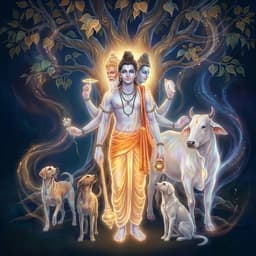
Dattatreya is depicted with three heads (representing Brahma, Vishnu, and Shiva), six arms carrying a kamandalu, japa mala, Sudarshana chakra, shankha, trishul, and damaru. He is accompanied by four dogs (representing the four Vedas) and a cow (Kamadhenu, representing the earth and dharma). He wanders as an avadhuta (one beyond worldly consciousness), teaching through his very being and lifestyle.

Dattatreya's teachings emphasize that a true seeker can learn from everything in nature. In the Avadhuta Gita and the Dattatreya section of the Bhagavata Purana, he describes his 24 gurus — from the earth, wind, and sky to a spider, a bee, and a courtesan. Dattatreya mantras are chanted for spiritual wisdom, guru's grace, overcoming negative planetary influences, removal of ancestral curses (pitru dosha), and attaining self-realization.

Attributes & Symbolism

1Three Heads (Trimurti)
2Six Arms
3Four Dogs (Four Vedas)
4Cow (Kamadhenu)
5Kamandalu (Water Pot)
6Japa Mala (Prayer Beads)
7Avadhuta (Renunciant)
8Audumbar Tree

All Lord Dattatreya Mantras

Frequently Asked Questions

Lord Dattatreya is a unique deity who embodies the combined aspects of the Hindu trinity — Brahma, Vishnu, and Shiva — in a single form. He is the son of the sage Atri and his devoted wife Anasuya, born as a divine boon when the Trimurti themselves appeared at their hermitage, impressed by Anasuya's unparalleled devotion and chastity. Dattatreya is considered the Adi-Guru (the first teacher) and the supreme master of yoga. Dattatreya is depicted with three heads (representing Brahma, Vishnu, and Shiva), six arms carrying a kamandalu, japa mala, Sudarshana chakra, shankha, trishul, and damaru. He is accompanied by four dogs (representing the four Vedas) and a cow (Kamadhenu, representing the earth and dharma). He wanders as an avadhuta (one beyond worldly consciousness), teaching through his very being and lifestyle. Dattatreya's teachings emphasize that a true seeker can learn from everything in nature. In the Avadhuta Gita and the Dattatreya section of the Bhagavata Purana, he describes his 24 gurus — from the earth, wind, and sky to a spider, a bee, and a courtesan. Dattatreya mantras are chanted for spiritual wisdom, guru's grace, overcoming negative planetary influences, removal of ancestral curses (pitru dosha), and attaining self-realization.
MantraList.in features 1 mantras dedicated to Lord Dattatreya. These include various types such as beej mantras, gayatri mantras, stotras, and devotional prayers. Each mantra serves a specific spiritual purpose and carries unique benefits.
All Lord Dattatreya mantras carry divine power when chanted with devotion and sincerity. The most widely chanted Lord Dattatreya mantra is often considered to be the primary mantra associated with this deity. The effectiveness of any mantra depends on the practitioner's faith, consistency, and correct pronunciation rather than any inherent hierarchy.
Yes, Lord Dattatreya mantras can be chanted at home in a clean, quiet space. Face east or north while chanting. You can set up a small altar or simply sit in a calm corner. The most important factors are devotion, regularity, and a peaceful mind. Morning hours (especially Brahma Muhurta) are traditionally considered the most auspicious time.
Worshipping Lord Dattatreya through mantras and prayers brings spiritual growth, inner peace, and divine blessings. Devotees experience increased clarity, protection from negative energies, fulfillment of righteous desires, and progress on the spiritual path. The specific benefits vary by mantra -- explore each mantra page for detailed information.