Skip to content
Lord Krishna

Lord Krishna

कृष्ण

The Divine Cowherd and Supreme Personality of Godhead

3 mantras available

About Lord Krishna

Lord Krishna is the eighth avatar of Vishnu and is worshipped as the Supreme God in his own right in many traditions. He is central to the Bhagavad Gita, the Bhagavata Purana, and countless other Hindu scriptures. Krishna's life, from his playful childhood in Vrindavan to his role as the divine charioteer in the Mahabharata, embodies the full spectrum of divine love (prema), wisdom (jnana), and righteous action (karma).

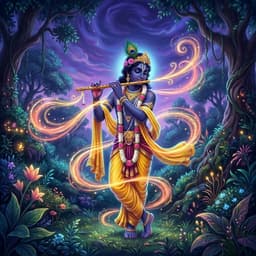
Krishna is depicted as a dark-complexioned youth playing the flute, wearing a peacock feather crown, and adorned with the Kaustubha gem. In Vrindavan, he is Gopala the divine cowherd; in Mathura and Dwaraka, he is the king and protector; and on the battlefield of Kurukshetra, he is Parthasarathy, the charioteer and spiritual guide of Arjuna. His Rasa Lila with the Gopis symbolizes the soul's longing for union with the Divine.

Krishna's teachings in the Bhagavad Gita form the philosophical cornerstone of Hinduism, presenting paths of karma yoga (selfless action), bhakti yoga (devotion), and jnana yoga (knowledge). Chanting Krishna mantras cultivates divine love, removes fear, and leads to ultimate bliss (ananda). The Hare Krishna Maha Mantra has become one of the most widely chanted mantras across the world.

Attributes & Symbolism

1Bansuri (Flute)
2Peacock Feather Crown
3Sudarshana Chakra
4Kaustubha Gem
5Pitambara (Yellow Silk)
6Govardhan Hill
7Cow (Go-Mata)
8Vaijayanti Mala (Garland)

All Lord Krishna Mantras

Frequently Asked Questions

Lord Krishna is the eighth avatar of Vishnu and is worshipped as the Supreme God in his own right in many traditions. He is central to the Bhagavad Gita, the Bhagavata Purana, and countless other Hindu scriptures. Krishna's life, from his playful childhood in Vrindavan to his role as the divine charioteer in the Mahabharata, embodies the full spectrum of divine love (prema), wisdom (jnana), and righteous action (karma). Krishna is depicted as a dark-complexioned youth playing the flute, wearing a peacock feather crown, and adorned with the Kaustubha gem. In Vrindavan, he is Gopala the divine cowherd; in Mathura and Dwaraka, he is the king and protector; and on the battlefield of Kurukshetra, he is Parthasarathy, the charioteer and spiritual guide of Arjuna. His Rasa Lila with the Gopis symbolizes the soul's longing for union with the Divine. Krishna's teachings in the Bhagavad Gita form the philosophical cornerstone of Hinduism, presenting paths of karma yoga (selfless action), bhakti yoga (devotion), and jnana yoga (knowledge). Chanting Krishna mantras cultivates divine love, removes fear, and leads to ultimate bliss (ananda). The Hare Krishna Maha Mantra has become one of the most widely chanted mantras across the world.
MantraList.in features 3 mantras dedicated to Lord Krishna. These include various types such as beej mantras, gayatri mantras, stotras, and devotional prayers. Each mantra serves a specific spiritual purpose and carries unique benefits.
All Lord Krishna mantras carry divine power when chanted with devotion and sincerity. The most widely chanted Lord Krishna mantra is often considered to be the primary mantra associated with this deity. The effectiveness of any mantra depends on the practitioner's faith, consistency, and correct pronunciation rather than any inherent hierarchy.
Yes, Lord Krishna mantras can be chanted at home in a clean, quiet space. Face east or north while chanting. You can set up a small altar or simply sit in a calm corner. The most important factors are devotion, regularity, and a peaceful mind. Morning hours (especially Brahma Muhurta) are traditionally considered the most auspicious time.
Worshipping Lord Krishna through mantras and prayers brings spiritual growth, inner peace, and divine blessings. Devotees experience increased clarity, protection from negative energies, fulfillment of righteous desires, and progress on the spiritual path. The specific benefits vary by mantra -- explore each mantra page for detailed information.