Skip to content
Lord Rama

Lord Rama

राम

Maryada Purushottam — The Ideal Man

2 mantras available

About Lord Rama

Lord Rama, the seventh avatar of Vishnu, is revered as Maryada Purushottam — the perfect man who embodies dharma (righteousness) in every aspect of life. The epic Ramayana, authored by Sage Valmiki, narrates his life: his birth in Ayodhya, exile to the forest, the abduction of his consort Sita by the demon king Ravana, and the great war in Lanka. Rama's story has been retold in countless regional versions, including Tulsidas's Ramcharitmanas in Hindi.

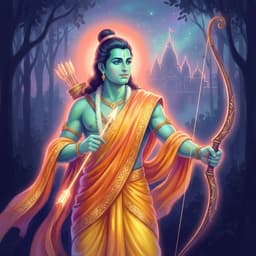
Rama is depicted as a noble prince with a bow (Kodanda) and arrow, his skin a deep blue or green hue, embodying regal composure and unwavering devotion to truth. His devotion to his father's word, his love for Sita, his friendship with Sugriva, and his bond with Hanuman exemplify the highest ideals of duty, love, loyalty, and righteousness.

Chanting Rama mantras brings protection, courage, and moral strength. The name 'Rama' itself is considered a Taraka Mantra (liberation mantra) — Lord Shiva himself is said to constantly chant it. Rama Nama Japa (repetition of Rama's name) is one of the simplest and most powerful spiritual practices, accessible to all regardless of caste, education, or ritual knowledge.

Attributes & Symbolism

1Kodanda (Bow)
2Arrow (Bana)
3Blue/Green Complexion
4Crown of Ayodhya
5Sita (Consort)
6Hanuman (Devotee)
7Paduka (Sacred Sandals)
8Dharma (Righteousness)

All Lord Rama Mantras

Frequently Asked Questions

Lord Rama, the seventh avatar of Vishnu, is revered as Maryada Purushottam — the perfect man who embodies dharma (righteousness) in every aspect of life. The epic Ramayana, authored by Sage Valmiki, narrates his life: his birth in Ayodhya, exile to the forest, the abduction of his consort Sita by the demon king Ravana, and the great war in Lanka. Rama's story has been retold in countless regional versions, including Tulsidas's Ramcharitmanas in Hindi. Rama is depicted as a noble prince with a bow (Kodanda) and arrow, his skin a deep blue or green hue, embodying regal composure and unwavering devotion to truth. His devotion to his father's word, his love for Sita, his friendship with Sugriva, and his bond with Hanuman exemplify the highest ideals of duty, love, loyalty, and righteousness. Chanting Rama mantras brings protection, courage, and moral strength. The name 'Rama' itself is considered a Taraka Mantra (liberation mantra) — Lord Shiva himself is said to constantly chant it. Rama Nama Japa (repetition of Rama's name) is one of the simplest and most powerful spiritual practices, accessible to all regardless of caste, education, or ritual knowledge.
MantraList.in features 2 mantras dedicated to Lord Rama. These include various types such as beej mantras, gayatri mantras, stotras, and devotional prayers. Each mantra serves a specific spiritual purpose and carries unique benefits.
All Lord Rama mantras carry divine power when chanted with devotion and sincerity. The most widely chanted Lord Rama mantra is often considered to be the primary mantra associated with this deity. The effectiveness of any mantra depends on the practitioner's faith, consistency, and correct pronunciation rather than any inherent hierarchy.
Yes, Lord Rama mantras can be chanted at home in a clean, quiet space. Face east or north while chanting. You can set up a small altar or simply sit in a calm corner. The most important factors are devotion, regularity, and a peaceful mind. Morning hours (especially Brahma Muhurta) are traditionally considered the most auspicious time.
Worshipping Lord Rama through mantras and prayers brings spiritual growth, inner peace, and divine blessings. Devotees experience increased clarity, protection from negative energies, fulfillment of righteous desires, and progress on the spiritual path. The specific benefits vary by mantra -- explore each mantra page for detailed information.