Skip to content
Lord Vishnu

Lord Vishnu

विष्णु

The Preserver and Protector of the Universe

3 mantras available

About Lord Vishnu

Lord Vishnu is the Supreme Being in Vaishnavism and the preserver in the Hindu Trimurti. He maintains cosmic order (dharma) and descends to earth in various avatars whenever righteousness declines. His ten principal avatars (Dashavatara) include Matsya, Kurma, Varaha, Narasimha, Vamana, Parashurama, Rama, Krishna, Buddha, and Kalki.

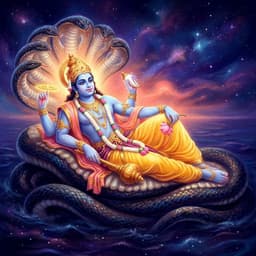
Vishnu is depicted as a blue-skinned deity reclining on the cosmic serpent Shesha (Ananta) in the ocean of milk (Kshira Sagara). He holds four divine objects: the Sudarshana Chakra (discus) representing the cosmic mind, the Panchajanya Shankha (conch) symbolizing the primordial sound Om, the Kaumodaki Gada (mace) signifying primal knowledge, and the Padma (lotus) denoting creation and liberation.

Vishnu's consort is Goddess Lakshmi, the deity of wealth and prosperity. Together they represent the sustaining force of the cosmos. Devotees worship Vishnu for protection, prosperity, removal of sins, and spiritual liberation. His mantras are chanted to invoke divine grace, maintain harmony in life, and progress on the path of bhakti (devotion).

Attributes & Symbolism

1Sudarshana Chakra (Discus)
2Panchajanya Shankha (Conch)
3Kaumodaki Gada (Mace)
4Padma (Lotus)
5Shesha Naga (Cosmic Serpent)
6Garuda (Eagle Mount)
7Kaustubha Gem
8Vanamala (Forest Garland)

All Lord Vishnu Mantras

Frequently Asked Questions

Lord Vishnu is the Supreme Being in Vaishnavism and the preserver in the Hindu Trimurti. He maintains cosmic order (dharma) and descends to earth in various avatars whenever righteousness declines. His ten principal avatars (Dashavatara) include Matsya, Kurma, Varaha, Narasimha, Vamana, Parashurama, Rama, Krishna, Buddha, and Kalki. Vishnu is depicted as a blue-skinned deity reclining on the cosmic serpent Shesha (Ananta) in the ocean of milk (Kshira Sagara). He holds four divine objects: the Sudarshana Chakra (discus) representing the cosmic mind, the Panchajanya Shankha (conch) symbolizing the primordial sound Om, the Kaumodaki Gada (mace) signifying primal knowledge, and the Padma (lotus) denoting creation and liberation. Vishnu's consort is Goddess Lakshmi, the deity of wealth and prosperity. Together they represent the sustaining force of the cosmos. Devotees worship Vishnu for protection, prosperity, removal of sins, and spiritual liberation. His mantras are chanted to invoke divine grace, maintain harmony in life, and progress on the path of bhakti (devotion).
MantraList.in features 3 mantras dedicated to Lord Vishnu. These include various types such as beej mantras, gayatri mantras, stotras, and devotional prayers. Each mantra serves a specific spiritual purpose and carries unique benefits.
All Lord Vishnu mantras carry divine power when chanted with devotion and sincerity. The most widely chanted Lord Vishnu mantra is often considered to be the primary mantra associated with this deity. The effectiveness of any mantra depends on the practitioner's faith, consistency, and correct pronunciation rather than any inherent hierarchy.
Yes, Lord Vishnu mantras can be chanted at home in a clean, quiet space. Face east or north while chanting. You can set up a small altar or simply sit in a calm corner. The most important factors are devotion, regularity, and a peaceful mind. Morning hours (especially Brahma Muhurta) are traditionally considered the most auspicious time.
Worshipping Lord Vishnu through mantras and prayers brings spiritual growth, inner peace, and divine blessings. Devotees experience increased clarity, protection from negative energies, fulfillment of righteous desires, and progress on the spiritual path. The specific benefits vary by mantra -- explore each mantra page for detailed information.